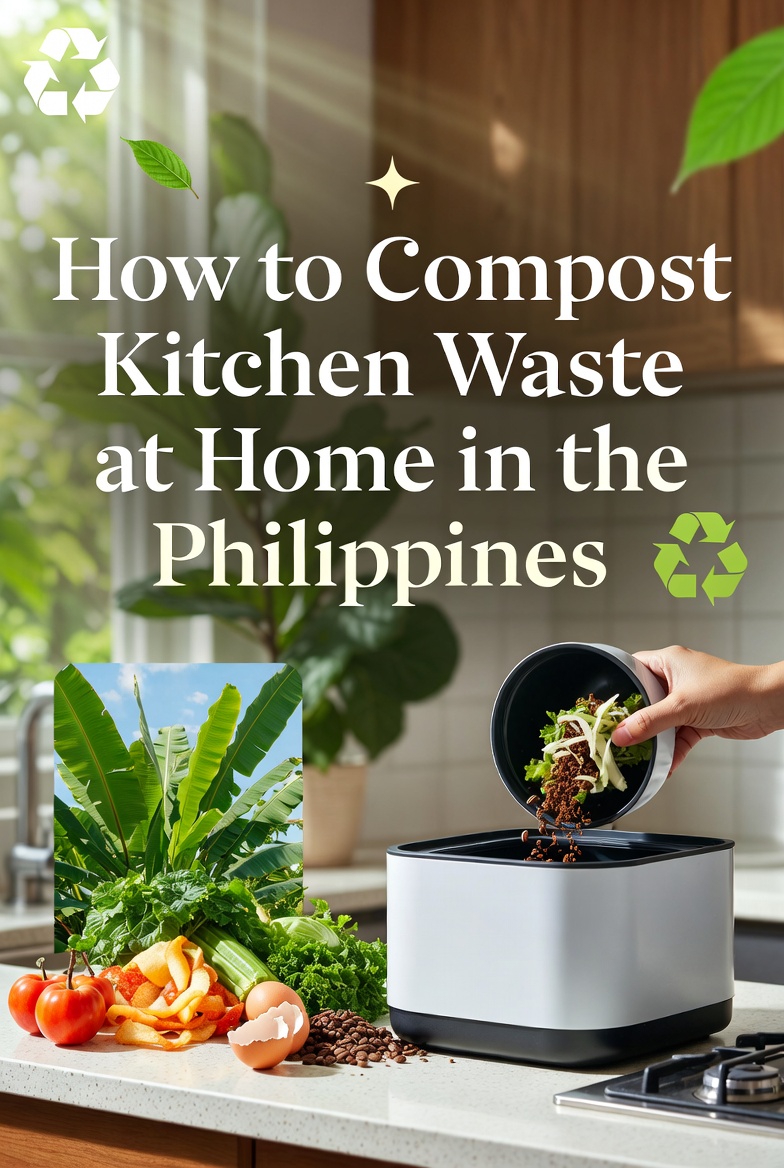
How to Compost Kitchen Waste at Home in the Philippines
How to Compost Kitchen Waste at Home in the Philippines: A Practical Guide for Urban and Rural Households
Food scraps are part of daily life in Filipino homes. From vegetable peelings after cooking sinigang to leftover rice and fruit skins, kitchen waste accumulates quickly. Most of it ends up in plastic trash bags, hauled to landfills where it produces methane and contributes to environmental problems.
Learning How to Compost Kitchen Waste at Home in the Philippines offers a practical alternative. Composting reduces household waste, lowers garbage collection volume, and creates organic fertilizer for backyard gardens and potted plants. With the country’s tropical climate, organic materials break down faster than in cooler regions — making home composting both efficient and affordable.
This comprehensive guide explains how to start, manage, and maintain a compost system suited to Filipino homes, whether you live in a rural barangay or a high-rise condominium.
Why Composting Makes Sense in the Philippine Climate
The Philippines has warm temperatures year-round, with high humidity and regular rainfall in many regions. These conditions accelerate decomposition. In simple terms, organic matter breaks down quickly in tropical environments.
Advantages of composting locally include:
- Reduced household waste volume
- Lower dependence on chemical fertilizers
- Improved soil quality for home gardens
- Cost savings on plant nutrients
- Reduced methane emissions
Understanding How to Compost Kitchen Waste at Home in the Philippines means taking advantage of climate conditions that naturally support faster composting.
What Counts as Kitchen Waste for Composting?
Not all food scraps belong in your compost bin. Knowing what to include and exclude prevents odor and pest problems.
Compost-Friendly Kitchen Waste
- Vegetable peels
- Fruit scraps
- Eggshells
- Coffee grounds
- Tea leaves
- Rice (in small amounts)
- Bread (limited quantity)
Avoid Composting
- Meat and fish scraps
- Oily food
- Dairy products
- Cooked dishes with sauce
- Plastic or synthetic materials
These restrictions help maintain a balanced compost pile and reduce the risk of attracting pests such as rats or flies.
Choosing the Right Composting Method
There are several methods suitable for Philippine households.
1. Traditional Compost Pit (Best for Rural Homes)
If you have backyard space, dig a shallow pit.
Steps:
- Dig a hole about 1 meter deep.
- Add alternating layers of kitchen waste and dry leaves.
- Cover lightly with soil.
- Turn every 1–2 weeks.
The soil cover controls odor and speeds decomposition.
2. Compost Bin System (Ideal for Subdivisions)
A compost bin is cleaner and more organized.
How to Set It Up:
- Use a plastic drum or large container.
- Drill holes for airflow.
- Add kitchen scraps and dry materials.
- Turn weekly.
This method works well in both urban and semi-urban areas.
3. Bokashi Composting (Best for Small Spaces)
Bokashi uses fermentation instead of traditional decomposition.
Advantages:
- Works indoors
- Minimal odor
- Handles small amounts of cooked food
After fermentation, the material is buried in soil to complete breakdown.
4. Vermicomposting (Using Earthworms)
Vermicomposting is highly efficient in tropical climates.
Benefits:
- Faster breakdown
- Produces nutrient-rich vermicast
- Suitable for small backyards
Red wigglers thrive in Philippine temperatures when properly managed.
Materials Needed for Home Composting
Starting compost at home requires minimal investment.
Basic materials:
- Container or compost pit
- Dry leaves or shredded paper
- Kitchen scraps
- Garden soil
- Stick or shovel for turning
Optional:
- Compost thermometer
- Gloves
- Earthworms
Understanding How to Compost Kitchen Waste at Home in the Philippines does not require expensive tools.
The Importance of Brown and Green Balance
Composting requires a balance between:
- Green materials: kitchen scraps, fruit peels, fresh grass
- Brown materials: dry leaves, cardboard, rice hull
A good ratio is roughly 2 parts brown to 1 part green.
Too much green material causes odor. Too much brown slows decomposition.
Balancing these elements is essential when applying How to Compost Kitchen Waste at Home in the Philippines effectively.
Step-by-Step Guide to Composting Kitchen Waste
- Collect kitchen scraps daily.
- Chop large pieces into smaller bits.
- Add a layer of brown materials.
- Add a layer of kitchen waste.
- Cover with soil or dry leaves.
- Turn once a week.
- Keep the pile moist but not soaked.
In tropical conditions, compost can mature within 6–8 weeks.
Managing Moisture in Humid Weather
The Philippines experiences heavy rainfall during monsoon season.
To prevent soggy compost:
- Keep bins covered.
- Ensure drainage holes are clear.
- Add extra dry materials during rainy months.
Too much moisture leads to foul odor and slow decomposition.
Preventing Pests and Odor
Improper composting attracts pests.
Prevention tips:
- Bury fresh scraps.
- Avoid meat and oily waste.
- Cover compost regularly.
- Use sealed bins in urban areas.
When done correctly, composting produces an earthy smell, not a foul odor.
Using Finished Compost
Finished compost appears dark, crumbly, and soil-like.
Applications:
- Mix into garden soil.
- Use for potted plants.
- Top-dress vegetable beds.
- Improve clay-heavy soil.
Organic fertilizer from compost improves soil structure and nutrient availability.
Composting for Urban Condominiums
Residents in high-rise buildings can still compost.
Options:
- Bokashi bins
- Small sealed containers
- Community composting programs
Balcony composting is possible if odor is controlled and drainage is managed properly.
Cost Savings of Home Composting
Estimated annual savings:
- Reduced garbage bag purchases
- Lower fertilizer expenses
- Improved plant yields
Over time, composting pays for itself.
Environmental Impact
Organic waste in landfills produces methane, a greenhouse gas.
By learning How to Compost Kitchen Waste at Home in the Philippines, households reduce their environmental footprint while contributing to local sustainability efforts.
Common Composting Mistakes
- Adding too much wet waste
- Ignoring airflow
- Failing to turn compost
- Using too large food scraps
- Not covering waste properly
Avoiding these ensures consistent results.
Composting During Dry Season
During hot months:
- Check moisture levels frequently.
- Add water sparingly if pile dries out.
- Provide shade for outdoor bins.
Tropical heat accelerates decomposition but can dry compost quickly.
Composting During Rainy Season
- Elevate bins.
- Use lids.
- Add extra dry leaves.
- Avoid water pooling.
Seasonal adjustments improve compost quality.
Scaling Composting for Community Use
Barangays and subdivisions can create shared compost areas.
Benefits:
- Reduces municipal waste
- Provides fertilizer for community gardens
- Encourages sustainable practices
Community composting strengthens environmental awareness.
Health and Safety Considerations
- Wear gloves when handling compost.
- Wash hands after turning.
- Avoid composting diseased plants.
- Keep bins away from drinking water sources.
Safe practices ensure hygienic composting.
How Long Does Composting Take?
In tropical climates:
- 4–8 weeks for active composting
- 2–3 months for full maturity
The timeline depends on temperature, moisture, and material balance.
Frequently Asked Questions (FAQs)
1. Can I compost cooked rice?
Yes, but only in small amounts and well covered.
2. Is composting smelly?
Properly maintained compost smells earthy, not foul.
3. Do I need worms?
No, but vermicomposting speeds up the process.
4. Can I compost citrus peels?
Yes, in moderation.
5. What if my compost smells bad?
Add more brown materials and turn the pile.
6. Is compost safe for vegetables?
Yes, once fully matured.
Final Thoughts
Understanding How to Compost Kitchen Waste at Home in the Philippines provides practical benefits for both households and the environment. The country’s tropical climate makes decomposition efficient, and materials are readily available.
By maintaining proper balance, managing moisture, and preventing pests, composting becomes a reliable way to convert kitchen scraps into nutrient-rich organic fertilizer.
Starting small is enough. With consistency, composting becomes part of daily routine — reducing waste, improving soil health, and supporting sustainable living across Filipino communities.